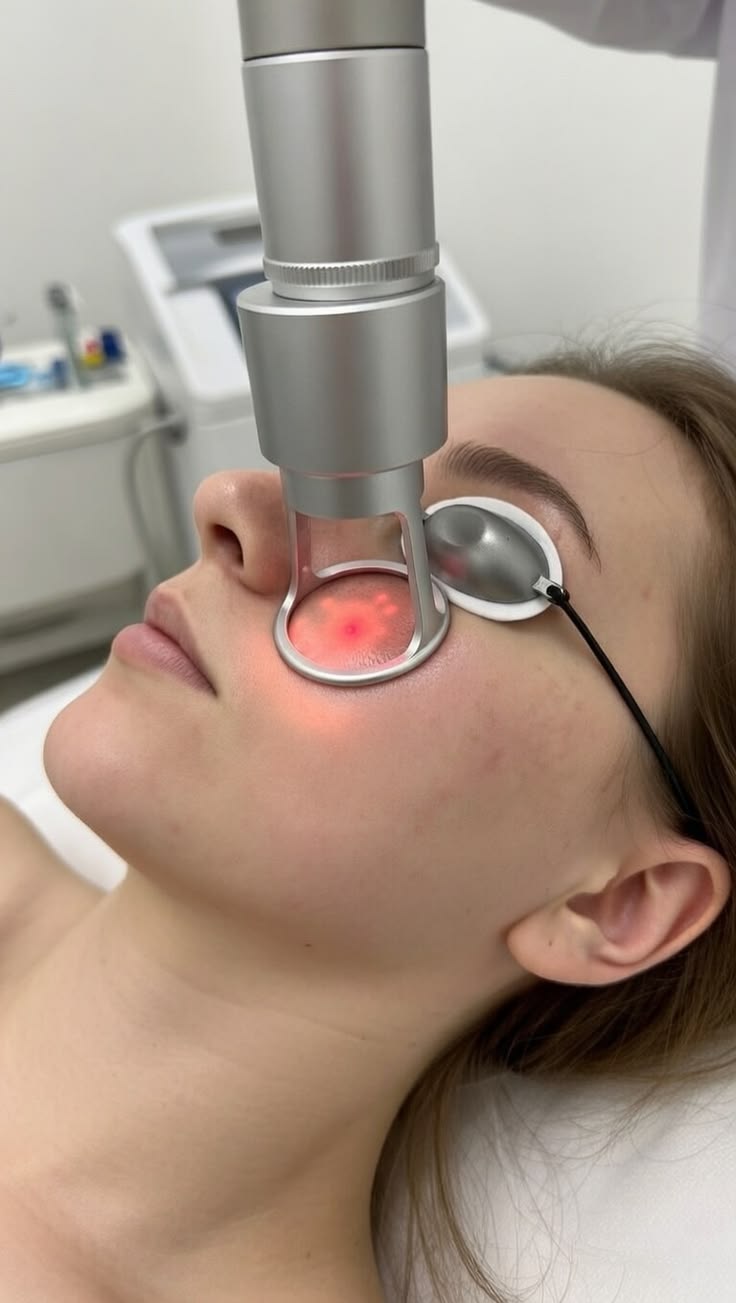
Mole & Skin Tag Removal
Mole and skin tag removal chính xác — không phẫu thuật
Removing skin tags & moles point by point precision
Using a Laser Fractional CO2 device with high-technology cutting and ablation heads to precisely and safely remove skin tags, soft fibromas, sebaceous cysts and moles without surgery.
Benign moles · Skin tags (syringoma, skin tags) · Small epidermal growths, keratoses · Soft fibromas, superficial skin lesions requiring precise removal.

Results from our clients
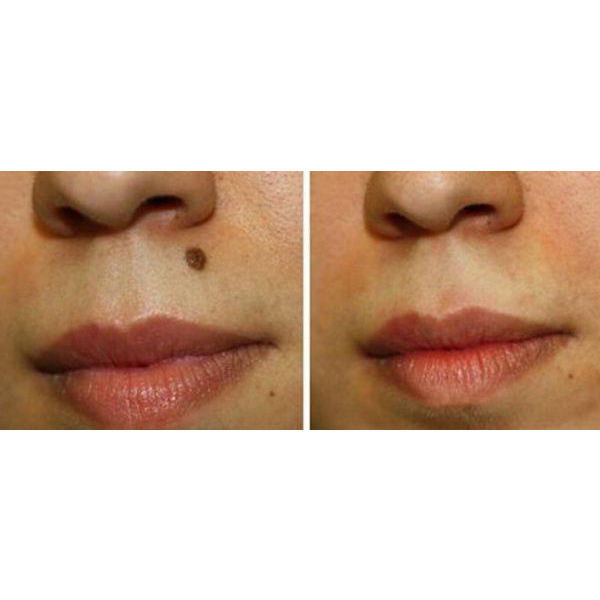 Result 1
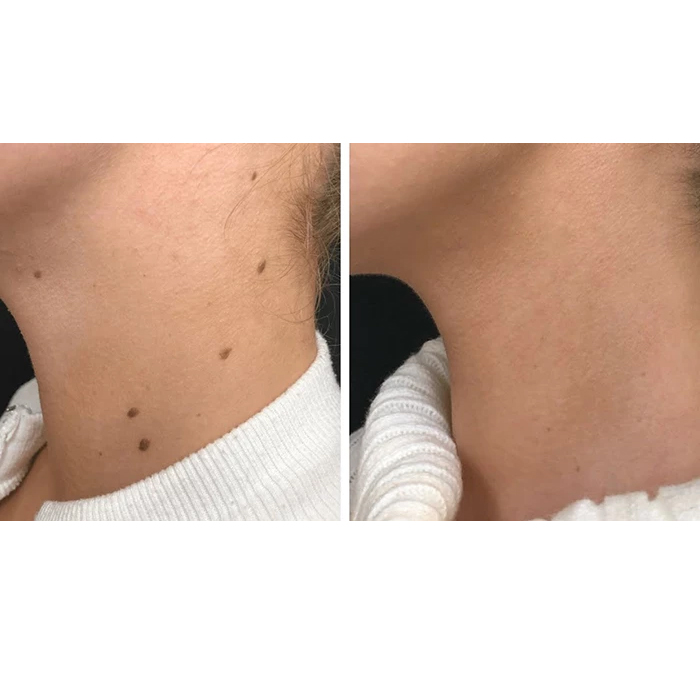 Result 2
Tissue ablation —
precision without surgery
The CO2 laser focuses energy precisely on the skin tag or mole, completely ablating the hyperplastic tissue while leaving the surrounding healthy skin unaffected. No incisions, sutures or general anaesthesia required.
Fractional Healing —
skin self-heals without scarring
Fractional technology creates micro-injuries interspersed with healthy tissue — skin recovers rapidly. The treated area forms a crust within 3–5 days which falls off naturally, leaving no scar when aftercare is followed correctly.
4 layers of action


Laser Fractional CO2
micro-point skin resurfacing (Micro-Ablative)
Ultra-fine thermal micro-points precisely remove excess tissue (moles, skin tags) while simultaneously stimulating skin regeneration, minimising scarring and leaving the treated skin smoother and more even.
Your questions answered
Common questions about Mole & Skin Tag Removal at Tú An Clinic.
Topical anaesthetic cream is applied 20–30 minutes beforehand so the procedure is almost painless. A mild burning sensation for 2–4 hours afterwards is entirely normal.
The treated area forms a crust within 3–5 days which falls off on its own; skin heals within 7–14 days. Do not pick at the crust to avoid post-inflammatory hyperpigmentation.
If aftercare instructions are followed correctly (no picking, use SPF 50+, avoid water contact for 24 hours) the risk of scarring is very low.
Most lesions are completely removed in a single session. Some larger or deeper ones may require 2 sessions. New skin tags may appear over time due to individual skin disposition.